
Last updated: — Production and inspection sections updated for the Bazhou, Hebei factory.
Ever wondered how the humble cotton bud, a staple in every bathroom cabinet, comes to be? For private label buyers and aspiring manufacturers, understanding the cotton buds manufacturing process is more than just a matter of curiosity—it’s the key to ensuring quality, cost-effectiveness, and brand integrity. The journey from raw cotton to a perfectly formed swab is a fascinating blend of precision engineering and material science that involves sophisticated cotton bud making machines and strict quality control measures.
Why Understanding Cotton Swab Manufacturing Matters
The global cotton swab market is worth billions of dollars, with demand continuing to grow across medical, cosmetic, and household applications. However, not all cotton swabs are created equal. A deep dive into the cotton swab production process reveals the critical factors that separate premium products from inferior alternatives. Whether you’re a private label buyer seeking reliable suppliers or an entrepreneur planning to enter the market, understanding these manufacturing intricacies is essential for success.
What You’ll Learn in This Complete Guide
This comprehensive guide will walk you through the entire manufacturing journey, from the selection of raw materials to the final packaged product. We’ll explore the machinery that makes it all possible and give you an inside look at how SwabMasters controls the key stages of the cotton buds manufacturing process. So, if you’ve ever asked, “How to make cotton buds?”—you’re in the right place.
Here’s what we’ll cover:
- The Essential Materials Behind a Quality Swab
- A Step-by-Step Look at the Manufacturing Process
- The Machinery That Drives Production
- SwabMasters’ Commitment to Excellence
- How to Start Your Own Cotton Swab Brand
Materials Used: The Building Blocks of a Perfect Cotton Bud
The quality of a cotton bud is determined long before it hits the production line. It all starts with the raw materials. Choosing the right components is crucial for creating a product that is safe, effective, and reliable. Here are the three primary materials that go into the cotton buds manufacturing process.
1. High-Quality Cotton
Cotton composition, absorbency, cleanliness, weight and processing history should match the agreed product specification. Review material documentation and approve a representative sample before production. Softness or a white appearance alone does not establish hypoallergenicity, low lint or suitability for medical use.
2. The Stick: Plastic, Paper, or Bamboo?
The stick, or spindle, provides the structural backbone of the cotton swab. The choice of material depends on the intended application and target market. Each has its own unique benefits:
- Plastic Sticks: These are the most common type, known for their flexibility and durability. They are ideal for a wide range of applications, from personal care to industrial use.
- Paper Sticks: An eco-friendly alternative, paper sticks are biodegradable and offer a good balance of strength and flexibility. They are becoming increasingly popular with environmentally conscious consumers.
- Bamboo Sticks: For a premium, sustainable option, bamboo is an excellent choice. It’s a highly renewable resource that offers superior strength and a natural aesthetic.

Alt text: A collection of plastic, paper, and bamboo sticks used in the cotton swab production line.
3. The Adhesive
The adhesive and application process must suit the cotton, shaft and intended use. Define a retention test and acceptance limit for the actual product rather than relying on a universal bond-strength claim. SwabMasters uses controlled adhesive preparation at the Bazhou factory to reduce unnecessary exposure during mixing and delivery; finished-product bond checks remain necessary.
The Manufacturing Process Explained: From Raw Material to Finished Product
The following stages explain the main controls a buyer should review. Equipment layout, drying or curing conditions and the exact sequence depend on the SKU and packaging configuration; confirm these during technical review.
Step 1: Material and Cotton Sliver Preparation
Match cotton sliver, shafts, adhesive and packaging to the approved specification. Sliver uniformity affects cotton delivery to the forming operation. Establish which preparation steps are completed at the factory and which components arrive from qualified suppliers; retain material identification through the order.
Step 2: Shaft Feeding and Cotton-Tip Forming
Feed suitable shafts into the forming equipment and control cotton delivery, tip profile and adhesive application. First-off samples should be checked against the approved sample before the production run continues. Shaft manufacture or cutting may be a separate operation rather than part of every swab line.
Step 3: Process and Environmental Controls
The new SwabMasters facility in Bazhou, Hebei uses a controlled clean production environment, enclosed extraction at cotton-dust-generating points and controlled adhesive preparation. These measures address handling and the production environment. Confirm drying or curing conditions for the materials used; a clean workshop or drying step does not establish product sterility.
Step 4: Vision Inspection and Automatic Rejection
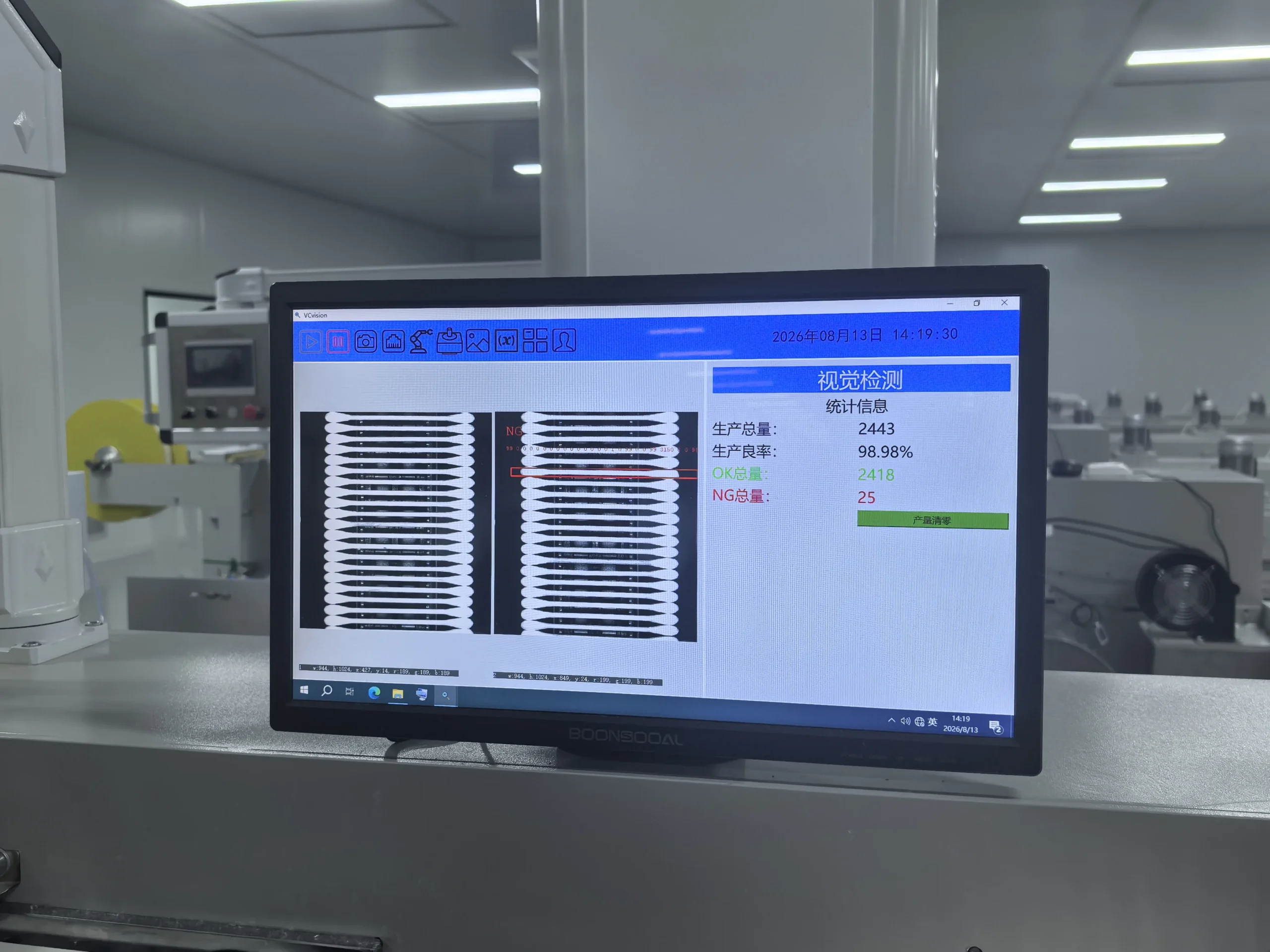
On the applicable automated configuration, vision inspection checks defined visible features and the rejection mechanism removes pieces judged nonconforming. Inspection settings must match the product and agreed defect examples. The system should not be described as measuring every defect or replacing retention, material or laboratory tests.
Step 5: Count Compensation, Packing and Release
Count compensation replaces rejected pieces to help maintain the required quantity before bag packing. Finished packs still need quantity, seal, artwork and batch-identification checks under the order’s quality plan. Bag dimensions, film, pack count and product geometry must be reviewed for compatibility; other packaging formats may require a different workflow.

Required Machinery Overview: The Heart of the Production Line
Review equipment by its function: material preparation or feeding, shaft feeding, tip forming, process conditioning where required, visual inspection, rejection, counting and packing. Buyers should ask which functions are integrated for their SKU and which require separate equipment or checks.
Automation reduces repetitive handling but still requires people to replenish materials, set up and change products, monitor operation, maintain equipment and investigate abnormal results. Machine speed alone is not saleable output: count accepted packs after inspection, stoppages and packaging losses.
SwabMasters’ Manufacturing Capabilities
SwabMasters manufactures cotton swabs at its new factory in Bazhou, Hebei. The Dongguan office supports sales and communication with buyers visiting South China. The factory combines automated production and bag-packing equipment with vision inspection, automatic rejection and count compensation on applicable configurations.
For OEM and private-label work, qualification starts with the shaft material, dimensions, cotton weight, tip shape, pack count, packaging and acceptance criteria. Confirm whether your chosen configuration can use the automated workflow, then evaluate samples and order-specific capacity.
Factory certifications and audit reports must identify the current legal entity, facility address, scope and validity. New-factory certification and buyer-audit preparation should not be represented by certificates from a previous facility.
Send a sample or SKU specification to discuss production, packaging and a factory review.
Quality Control and Technical Specifications
Use a written specification covering shaft dimensions and strength, cotton weight and tip profile, retention, appearance, pack quantity and packaging. Agree the methods, sample size and acceptance limits before production; universal values for bond strength, cotton weight or tolerance do not fit every design.
Combine first-off approval and in-process checks with final lot sampling. Vision inspection covers configured visible features; mechanical testing assesses properties such as retention, and any composition or microbiological requirement needs its own evidence. Investigate nonconforming results and document the disposition before shipment.
See the cotton swab quality inspection guide for planning the checks and records.
Environmental Considerations and Manufacturing Efficiency
At the Bazhou facility, enclosed cotton-dust extraction and controlled material handling support orderly production. Assess waste, energy use, rejects and packaging losses using actual operating records rather than assuming automation eliminates them.
For environmental product claims, verify the complete shaft, cotton, adhesive and packaging specification. A natural shaft material alone does not prove the finished product is compostable or certified sustainable.
Cost Analysis and Investment Considerations
Compare material consumption, accepted output, direct labor, setup and changeover, power, maintenance, inspection and packaging costs for the same SKU. Automated handling can reduce repetitive labor, while machine investment and upkeep remain part of the cost.
For a machinery investment, obtain quotations matched to product range, inspection coverage, packing format and service requirements. For sourcing, compare the same approved specification and named delivery term. Read our manufacturing cost guide for the main cost drivers.
Market Applications and Future Trends
The cotton buds manufacturing process serves diverse markets including medical/healthcare, cosmetic/personal care, and industrial applications. Each segment has specific requirements for quality, materials, and packaging.
Future trends include increased demand for biodegradable materials, smart manufacturing with IoT integration, and growing customization requirements. These trends drive innovation in both materials and manufacturing processes.
Conclusion: Mastering Cotton Swab Manufacturing
The cotton buds manufacturing process represents a perfect blend of traditional materials and modern technology. Success requires understanding every aspect, from raw material selection to final packaging. Quality control, efficient machinery, and attention to detail separate professional manufacturers from amateur operations.
For businesses considering entry into this market, partnering with experienced manufacturers like SwabMasters provides access to proven processes, quality systems, and market expertise. Whether you’re developing a new brand or improving existing products, understanding these manufacturing fundamentals ensures informed decisions that lead to market success.