
Wooden Stick Cotton Swabs Manufacturer for OEM & Private Label
Develop a firm, retail-ready wooden stick cotton swab around the required stick length, surface finish, tip profile, pack count, packaging and target market.
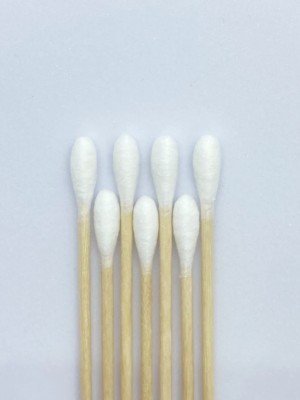
Built for retailers, importers, distributors and private-label programs.
A Firm Shaft for Controlled Handling and Retail Positioning
Wooden sticks provide a firm feel where buyers prefer less flex than common plastic or paper shafts.
Wooden shaft diameter and basic construction normally follow stable production specifications. Buyers can compare available product lengths, straightness, surface smoothness, resistance to breakage, tip attachment and suitability for the intended use.
Firm Handling
Wood selection and standard shaft construction influence stiffness and handling.
Smooth Finish
Surface inspection helps control roughness, visible defects and splinter risk.
Buyer-defined Cotton Tip
Tip shape, size, density and retention are matched to the intended application.
Retail-ready Formats
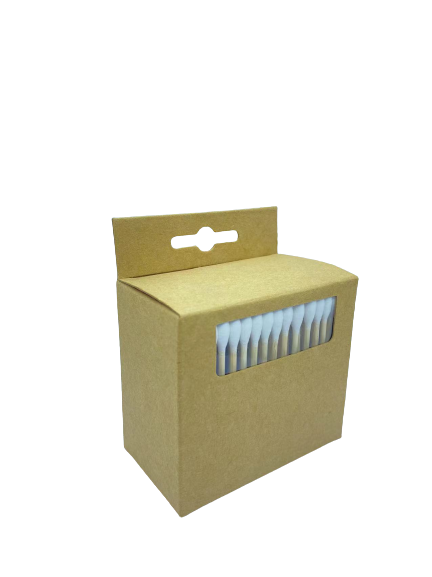
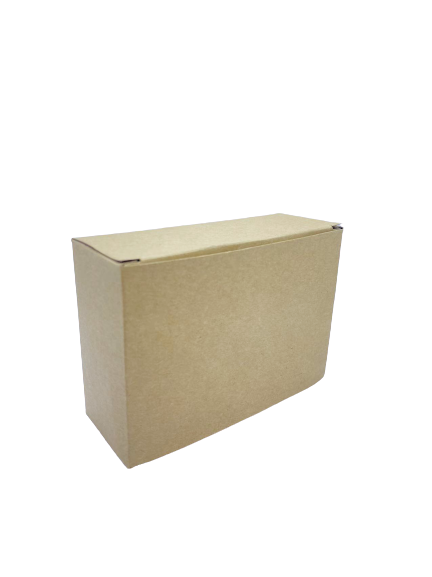
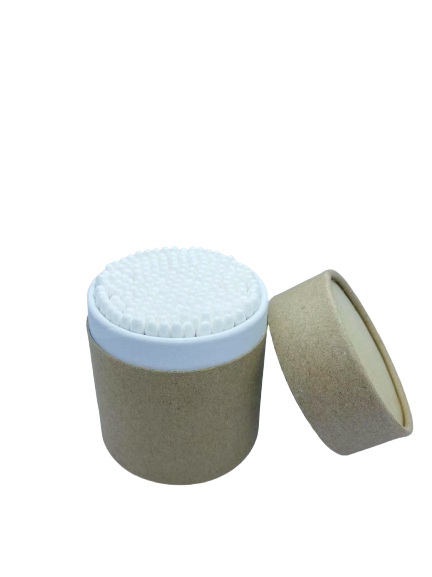
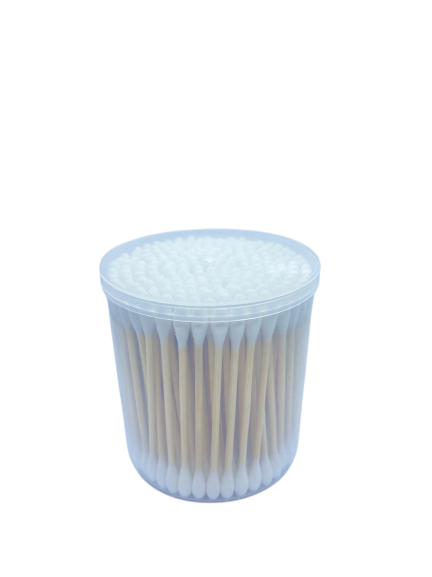
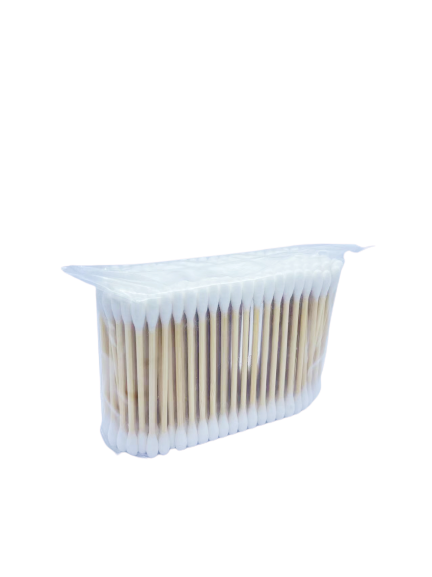
Paper boxes, cans, PP boxes and value bags support different market positions.

Wooden Shaft Selected for Rigidity and Surface Quality
Wood selection, available stick length, straightness, moisture condition, surface finish and resistance to breakage should be confirmed against the intended product.
- Stable standard shaft specification
- Different product lengths available
- Straightness and appearance checks
- Production comparison against the approved sample

Softness, Shape and Tip Retention Work Together
Cotton selection, winding density, tip geometry and adhesive application influence softness, absorbency, appearance and attachment strength.
- Tip profile matched to use
- Winding and adhesive control
- Appearance checked against a reference
- Performance confirmed during sampling
Choose the Format That Fits Your Shelf, Market and Cost Target
Standard structures can shorten development; custom printing, pack count and components should be confirmed before quotation.
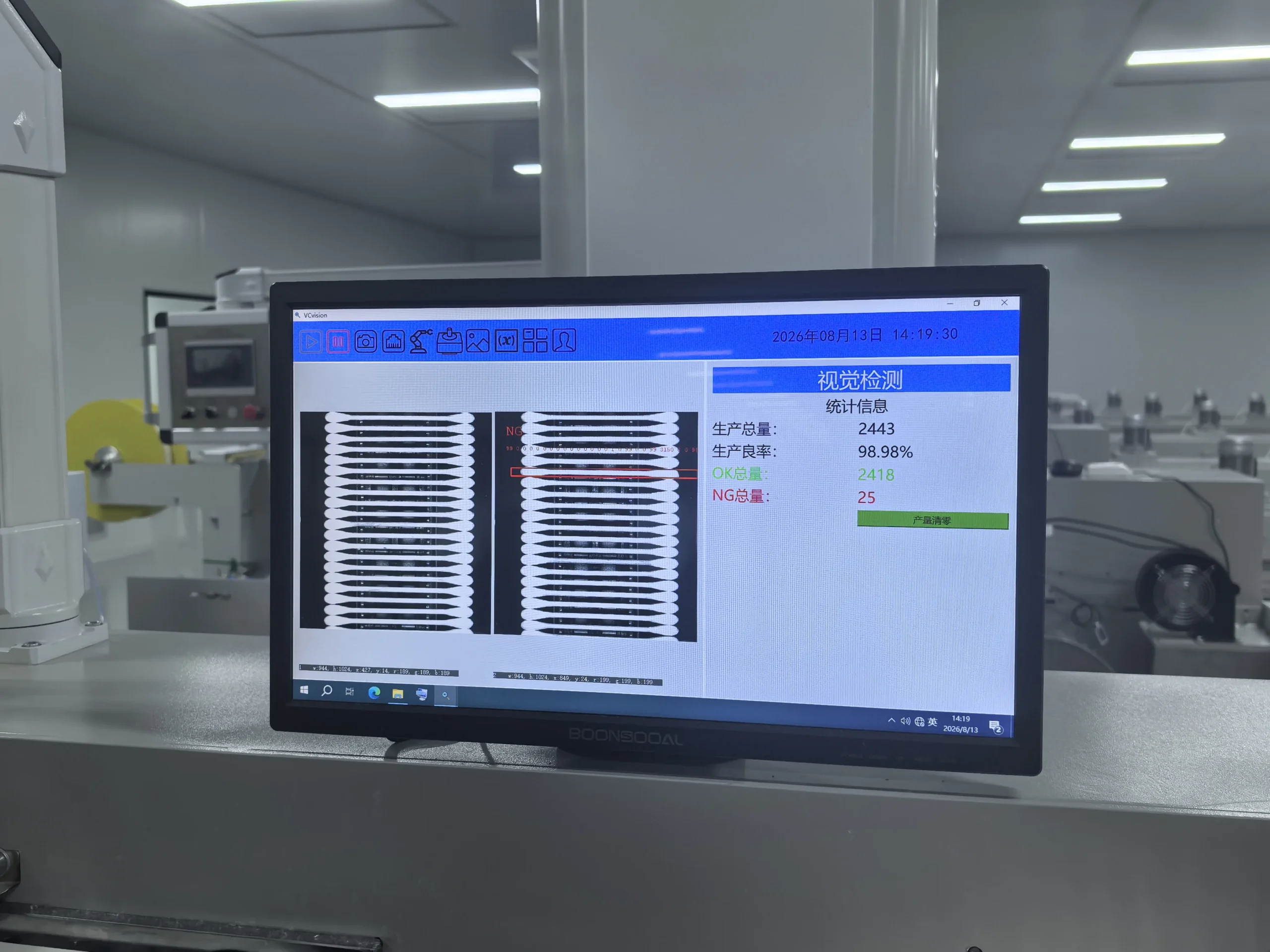
Quality Controls Closer to the Production Line
For applicable products and packing configurations, equipment is designed to identify defined visible defects, reject nonconforming pieces and compensate the count after rejection.
- 01
Visible-quality Parameters
Approved criteria provide a reference for appearance inspection.
- 02
Automatic Rejection
Detected nonconforming pieces can be removed during production.
- 03
Quantity Compensation
Replacement pieces help maintain the intended pack count.
- 04
Surface and Process Control
Wooden shafts, cotton, adhesive and packing settings are checked against the approved requirement.
Automation supports consistent inspection but does not justify a “zero defect” claim. Final controls and buyer-approved standards remain necessary.
Wooden Stick Cotton Swab Pricing Starts with the Specification
A useful supplier comparison requires the same product definition—not only a target unit price.
Wooden Shaft Specification
Wood selection, available stick length, finish, straightness and stiffness influence material and processing cost.
Cotton and Tip Design
Cotton weight, shape, density and softness affect material and processing.
Count and Packaging
Pack quantity, structure, printing, inserts and carton efficiency change total cost.
Order and Compliance Scope
Volume, testing, labeling, audits and destination-market requirements affect the program.
Send One Wooden Stick Cotton Swab SKU. We’ll Build the Benchmark.
Compare shaft rigidity, surface finish, tip retention, packing, MOQ, timing and FOB cost before discussing a broader sourcing change.
Questions B2B Buyers Ask Before Sampling
Answers are specification-based because product length, packaging, volume and market requirements differ by program.
What is the MOQ for private-label wooden stick cotton swabs?+
MOQ depends on the selected stick length, cotton tip, pack count, packaging and printing method. Send the target SKU for a program-specific quotation.
How are wooden sticks different from bamboo or paper sticks?+
Wooden sticks are generally selected for a firm feel. Bamboo and paper have different stiffness, surface and market-positioning characteristics, so the best option depends on the intended product.
How do you control roughness and splinter risk?+
Wood selection, cutting, polishing and surface inspection are evaluated against the approved sample. Buyers should define any special surface or safety test requirement before sampling.
How do you control cotton-tip retention?+
Retention depends on the standard wooden shaft, cotton winding and adhesive application. The target should be checked against the approved sample and the buyer’s test standard.
Can wooden stick dimensions be customized?+
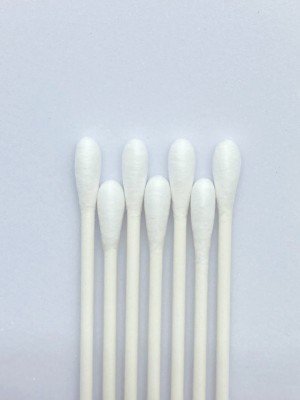
Standard retail cotton swabs normally use fixed shaft dimensions with available product lengths. For special-use products such as pet-care swabs, a longer wooden shaft and larger-diameter cotton tip can be developed, subject to MOQ, production feasibility and an approved sample.
Can you provide samples for evaluation?+
Samples can be discussed after product and packaging requirements are reviewed. Custom development, artwork or freight may involve additional cost.
Which documents are available for buyer review?+
Request current factory, product and testing documents from the sales team. Each document should be checked for validity, legal entity, product scope and destination-market relevance.


What Should We Benchmark?
Send a current SKU, specification or product photo. We’ll compare the wooden shaft, cotton tip, pack count, packaging, expected volume and target market, then recommend the next step.
Tell Us What You Need
Share the product and buying details so our sales team can prepare the right sample, quotation or SKU comparison.
- Selected stick length, finish and tip configuration
- Pack count and packaging format
- Target market and expected volume
- Sample, quotation or SKU benchmark
Send Product RequirementsClear specifications help us quote accurately and respond faster.