Last updated: — Production and inspection sections updated for the Bazhou, Hebei factory.
By Mike, Production Director at SwabMasters | Production and inspection sections updated September 18, 2026
Most articles about cotton swab manufacturing describe the same five production steps. They tell you cotton gets wound onto a stick, dried, and packed into a box. That information is accurate but incomplete. It does not answer the questions that actually matter to buyers, entrepreneurs, and brand owners.
Questions like: How much does it really cost to produce a single cotton swab? Can you make the stick shorter to save money? What happens if you use recycled plastic instead of virgin polymer? Is it even possible to order custom specifications without committing to a million-piece minimum?
These are the exact questions a client from the United States recently asked us in an email exchange. His name is Aydin Hatemi, and his questions were so thoughtful that we decided to turn our conversation into this article. We believe the answers will help anyone who is researching cotton bud manufacturing, whether you are sourcing products for your Amazon store, planning a private label brand, or simply curious about how this everyday item gets made.
Cotton Swab Manufacturing Cost Breakdown: Where Does the Money Go?
One of the first things Aydin asked us was straightforward:
“I want to learn about manufacturing cost breakdown of cotton swabs. For example, how much cotton, plastic, electricity, packaging, and labor cost.”
It is a fair question. And we wish we could give a simple pie chart with fixed percentages. But the honest answer is that there is no single cost formula for cotton swab production. The cost structure shifts significantly depending on the product type, raw material grade, automation level, and packaging method.
Here is what we told Aydin:
“In reality, it’s difficult to give a fixed percentage for cotton, plastic, electricity, packaging, and labor. The reason is that costs vary significantly depending on raw material grade, production equipment, automation level, and packaging method. For example, medical-grade cotton and sterile packaging will naturally increase cost compared to basic daily-use swabs.”
That said, we can share general ranges based on our 23 years of manufacturing experience. The table below reflects typical cost distribution for two common product categories: standard daily-use cotton buds and medical-grade sterile swabs.
| Cost Component | Daily-Use Cotton Buds | Medical-Grade Sterile Swabs |
| Raw Cotton / Fiber | 30–40% | 20–30% |
| Stick Material (plastic, paper, bamboo) | 20–25% | 10–15% |
| Adhesive | 3–5% | 3–5% |
| Packaging | 10–15% | 25–35% |
| Labor | 10–15% | 8–12% |
| Electricity & Overhead | 5–8% | 5–8% |
| Quality Control & Testing | 2–3% | 8–12% |
| Sterilization (EO gas) | N/A | 5–8% |
Several patterns emerge from this breakdown. For daily-use cotton buds, raw cotton is the single largest cost driver, typically accounting for 30 to 40 percent of total production cost . The stick material comes second. For medical-grade swabs, the cost structure flips — packaging and sterilization become dominant because each swab must be individually sealed in a sterile packet and processed through ethylene oxide (EO) gas sterilization.
This is why the unit price difference between a basic cotton bud and a medical swab can be 5x to 10x, even though the physical product looks similar. The cotton and stick cost roughly the same. It is the packaging, sterilization, and quality control that drive the price up.
What does this mean for buyers? If you are sourcing cotton buds for retail or e-commerce, the biggest lever for cost optimization is not the cotton itself — it is the packaging format. Choosing bulk packaging over individual wrapping, or standard carton boxes over blister packs, can reduce your per-unit cost by 15 to 25 percent.
How Cotton Buds Are Made: The 5-Step Manufacturing Process
A useful cost comparison follows the actual configuration used for the SKU. Material preparation, forming, process conditioning, inspection and packing may be integrated or performed separately. Confirm the route before allocating costs.
- Qualify and prepare materials. Cotton sliver, shafts, adhesive and packaging must match the approved specification. Include material checking, preparation losses and handling costs.
- Set up and form the tips. Match feeding, cotton delivery and adhesive application to the shaft and tip design. Setup and first-off approval consume time even on an automated line.
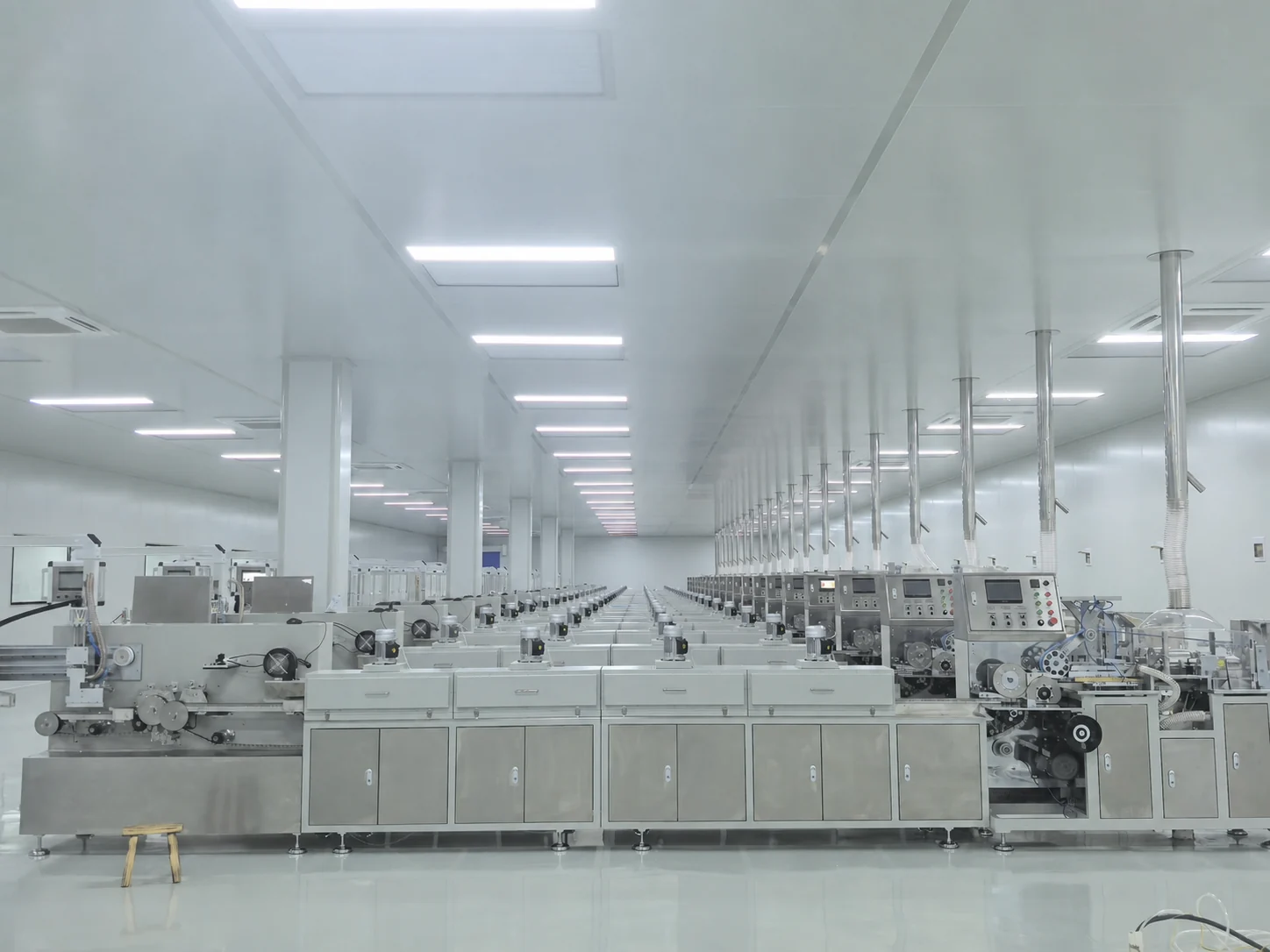
- Control the process. At SwabMasters’ Bazhou, Hebei factory, controlled adhesive preparation, a controlled clean environment and enclosed cotton-dust extraction support handling and production conditions.
- Inspect and reject. Vision inspection checks defined visible features on applicable configurations, and automatic rejection removes pieces judged nonconforming. Retention, material and any laboratory checks are costed separately from the camera’s visual coverage.
- Compensate, pack and verify. Count compensation replaces rejected pieces to help maintain the specified quantity before bag packing. Include finished-pack quantity, seal, label and shipment-release checks.
Accepted packs per shift are a more useful cost denominator than nominal machine speed. Stoppages, changeovers, rejects and packing constraints affect saleable output. See the production process guide for a fuller explanation.
Can You Make Cotton Swabs with Shorter Sticks? The Custom Manufacturing Question
This was one of the most creative questions from Aydin’s email:
“Cotton swab machines are configurable to manufacture with shorter sticks. For example, I want to manufacture cotton swabs with 1 inch stick for prisons, and disaster kits/supplies. The purpose of 1 inch stick is saving cost for such situations.”
The idea makes intuitive sense. A shorter stick uses less material, so it should cost less. And for specific use cases like prison facilities (where longer sticks could pose safety concerns) or disaster relief kits (where compact size matters), a 1-inch cotton swab seems practical.
Here is our honest assessment:
“Theoretically yes, machines can produce different lengths and diameters. However, in practice, each specification requires matching molds and equipment configuration. Most machines are optimized for standard market sizes, which is why those dimensions dominate globally. A very specific custom size would require dedicated tooling, and once you move away from standard specs, you lose the scale advantage — meaning the unit cost may actually increase rather than decrease.”
This is a counterintuitive reality of manufacturing economics. Using less material does not always mean lower cost. The cost of a cotton swab is not just the raw material — it includes machine setup time, mold changeover, production speed, and the ability to run continuously without interruption.
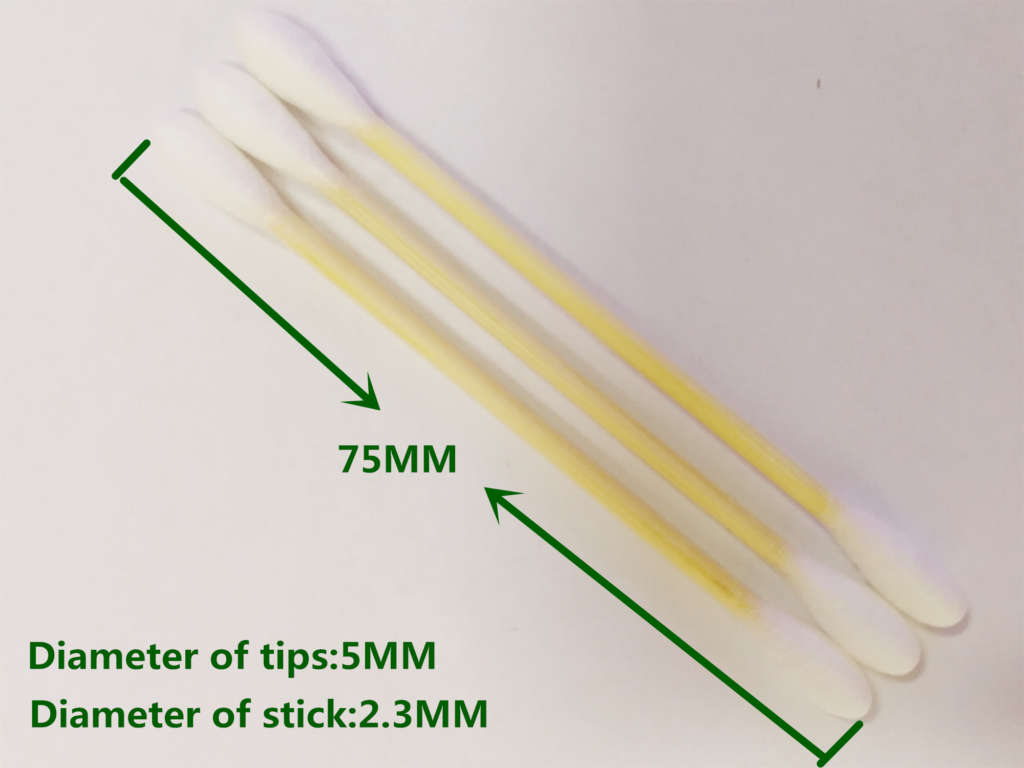
Standard cotton bud dimensions (75–80mm stick length, 2.2mm diameter) exist because they represent the optimal balance between material usage, machine efficiency, and consumer preference. Global demand for this specification is enormous, which means production lines run 24/7 at maximum efficiency. The moment you deviate from standard specs, you introduce:
Tooling costs. New molds and guides must be fabricated, which can cost $2,000 to $8,000 depending on complexity. This is a one-time cost, but it must be amortized over your order volume.
Reduced production speed. Machines optimized for standard dimensions may run 20 to 40 percent slower when producing non-standard sizes, because the feeding mechanism, cutting precision, and cotton wrapping tension all need recalibration.
Smaller production runs. Custom specifications typically mean smaller order volumes, which eliminates the bulk purchasing advantage for raw materials.
The bottom line? Custom cotton swab manufacturing is absolutely possible — SwabMasters does it regularly for OEM clients. But the cost savings from using less material are often offset by the efficiency losses. For Aydin’s prison and disaster kit concept, the better approach might be to use a standard-length stick with a lighter-weight material, rather than engineering a completely new dimension.
Cotton Swab Stick Materials: Plastic, Paper, Bamboo, and the Economics Behind Each
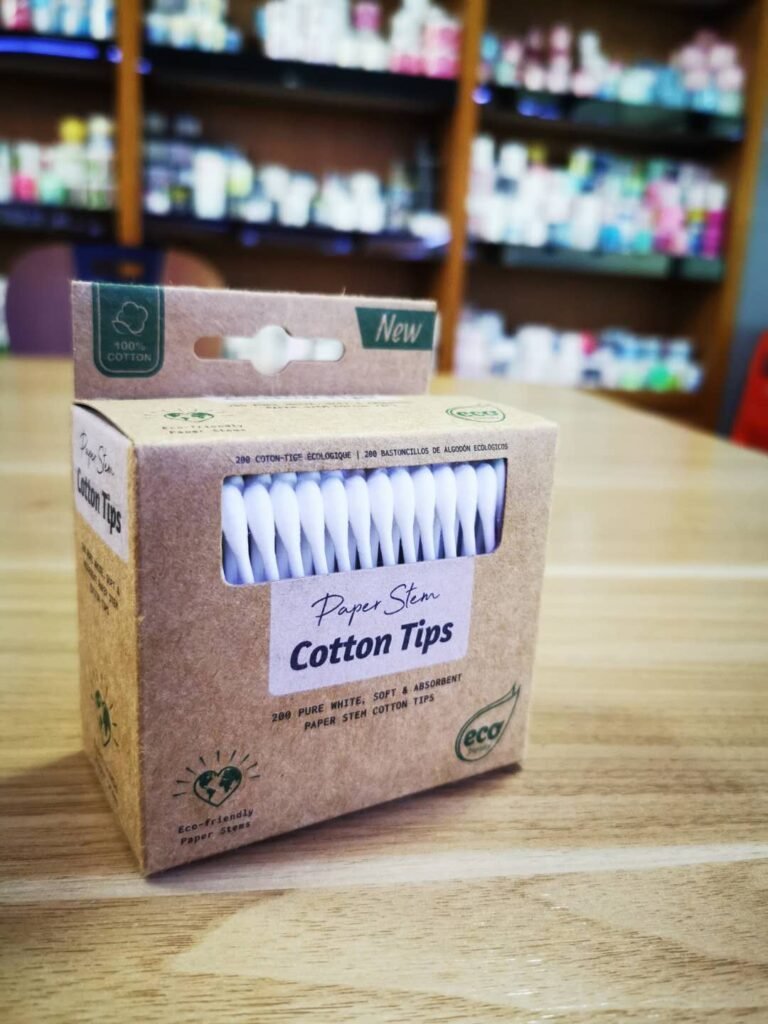
The stick is the structural backbone of every cotton swab. It determines the product’s rigidity, feel, environmental profile, and cost. Aydin’s email raised a particularly technical question about plastic stick economics:
“Is it possible to manufacture plastic sticks for cheaper by using recycled polymer with filler material such as calcium carbonate and hollow shape?”
This question reveals a sophisticated understanding of polymer engineering. Let us break down the material science behind cotton swab sticks.
Plastic Sticks (Polypropylene)
Plastic remains the most common stick material globally, accounting for approximately 60 percent of cotton swab production . The standard material is polypropylene (PP), chosen for its flexibility, moisture resistance, and low cost.
What most people do not realize is that plastic cotton swab sticks are already hollow by design. They are produced through an extrusion process that creates a thin-walled tube, not a solid rod. This is both an engineering and economic decision — a hollow tube uses less material while maintaining adequate rigidity.
Here is what we explained to Aydin about cost reduction possibilities:
“If there is no strict quality requirement, non-virgin plastic or recycled polymer can be used. Adding filler materials like calcium carbonate is also technically possible. Plastic sticks are hollow by design, and they can be made thinner and lighter to reduce material usage. When we refer to different ‘weights’ of plastic swabs, this is usually what it means — adjusting wall thickness to balance strength and cost. Of course, reducing weight too much may affect rigidity, so there is always a trade-off between cost and performance.”
The following table compares the four main stick material options available to cotton swab buyers:
| Property | PP Plastic (Virgin) | PP Plastic (Recycled) | Paper / Cardboard | Bamboo |
| Cost per 1,000 sticks | $1.20 – $1.80 | $0.80 – $1.30 | $1.50 – $2.20 | $2.00 – $3.50 |
| Rigidity | High | Medium-High | Medium | High |
| Moisture Resistance | Excellent | Good | Poor | Good |
| Biodegradable | No | No | Yes | Yes |
| EU Market Compliant (post-SUP Directive) | No (banned) | No (banned) | Yes | Yes |
| Best For | Non-EU markets, medical | Budget products, non-EU | EU retail, eco brands | Premium eco brands |
| Wall Thickness Range | 0.3–0.5mm | 0.3–0.5mm | N/A (solid) | N/A (solid) |
A critical regulatory note: the European Union’s Single-Use Plastics (SUP) Directive, which took full effect in 2021, bans plastic-stemmed cotton buds across all EU member states . This regulation has fundamentally shifted the global market. Any brand selling into Europe must use paper or bamboo sticks. However, plastic sticks remain legal and dominant in North America, the Middle East, Southeast Asia, and most of Africa.
The Calcium Carbonate Filler Technique
Aydin’s suggestion about adding calcium carbonate (CaCO3) as a filler material is a well-known technique in plastics manufacturing. CaCO3 is significantly cheaper than polypropylene resin, so replacing 10 to 30 percent of the PP with calcium carbonate filler can reduce raw material cost by 8 to 20 percent.
However, there are trade-offs. Higher filler content makes the plastic more brittle and less flexible. For cotton swab sticks, which need to bend slightly without snapping, the practical filler limit is around 15 to 20 percent. Beyond that, the stick becomes too rigid and prone to breaking during use — which creates a poor user experience and potential safety concerns.
Paper and Bamboo: The Sustainability Premium
Paper sticks cost 25 to 80 percent more than virgin plastic sticks, and bamboo sticks can cost 70 to 150 percent more. Despite the higher material cost, these options are increasingly popular because they unlock access to the European market and command premium retail pricing. A bamboo cotton bud that costs $0.003 more to manufacture can retail for $0.02 to $0.05 more than a plastic equivalent — representing a significantly higher profit margin for brands.

Cotton Swab Manufacturing Economics: What Drives the Final Price?
Automation changes the balance between direct labor, equipment, maintenance, setup and inspection. It can reduce repetitive feeding, handling and bag-packing work on a suitable configuration, but it does not remove supervision, material preparation, maintenance or final release checks.
SwabMasters’ new Bazhou factory combines automated production with vision inspection, automatic rejection and count compensation on applicable configurations. Evaluate the effect with the same shaft weight, cotton quantity, tip profile, pack count and inspection requirements. A personnel comparison alone cannot establish a percentage reduction in total cost or selling price.
- Material cost: cotton, shafts, adhesive and packaging consumed per accepted pack, including documented waste.
- Operating cost: labor, power, maintenance and equipment allocation for the run.
- Setup and changeover: adjustments, trial pieces and first-off approval spread across the accepted order quantity.
- Quality cost: in-line inspection, mechanical checks, sampling, laboratory work where required, and the handling of nonconforming goods.
- Packing and logistics: packaging compatibility, printing MOQ, cartons, loading and the agreed delivery term.
A longer compatible production run can spread setup costs over more packs; custom geometry or packaging may require a different configuration. Request the product MOQ and printed-packaging MOQ separately. Obtain a quotation for the current specification rather than using a historical cost percentage as a fixed rule.
Send your current sample, pack format and order volume for a like-for-like cost review.
Special Applications: Cotton Swabs for Prisons, Disaster Kits, and Beyond
Aydin’s email introduced an application we rarely see discussed in the cotton swab industry: manufacturing cotton swabs specifically for institutional and emergency use. His idea of a 1-inch cotton swab for prisons and disaster kits highlights a broader market segment that most manufacturers overlook.
Prison and correctional facilities have unique requirements for personal care products. Standard cotton swabs with long sticks can be classified as contraband in some facilities due to safety concerns. A shorter, more compact design addresses this issue while still providing basic hygiene functionality. The U.S. Bureau of Prisons and state correctional systems collectively serve over 1.2 million incarcerated individuals , representing a niche but consistent demand channel.
Disaster relief and emergency preparedness kits represent another underserved market. Organizations like FEMA, the Red Cross, and various NGOs assemble millions of hygiene kits annually. These kits prioritize compact size and low cost per unit. A cotton swab designed specifically for this application — perhaps with a shorter stick and simplified packaging — could offer meaningful cost savings at scale.
Travel and hospitality is a related segment. Airlines, hotels, and travel kit manufacturers need compact cotton swabs that fit into small amenity packages. The standard 75mm stick is often longer than necessary for a travel pouch.
While we explained to Aydin that custom dimensions can increase unit cost due to tooling and efficiency factors, the market opportunity for specialized cotton swabs is real. The key is reaching sufficient volume to justify the initial setup investment. For buyers interested in exploring custom specifications, we recommend starting with a sample order to validate the concept before committing to large-scale production.
Frequently Asked Questions About Cotton Swab Manufacturing
How many cotton swabs can one machine produce per day?
Output depends on the product, packing configuration, available operating time and accepted yield. Ask for order-specific capacity at SwabMasters’ Bazhou, Hebei facility, including changeover and inspection, rather than multiplying a nominal machine speed by historical machine counts.
What is the minimum order quantity for custom cotton swabs?
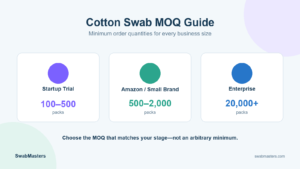
MOQ depends on the SKU, setup and packaging. Ask SwabMasters to quote product MOQ and printed-packaging MOQ separately, and confirm whether the quoted unit means individual swabs or retail packs.
How long does it take to manufacture a cotton swab order?
Production time depends on order volume and complexity. A standard order of 50,000 to 100,000 pieces typically takes 15 to 20 days from order confirmation to shipment. Larger orders or custom packaging may require 25 to 35 days.
Are plastic cotton swabs banned everywhere?
No. Plastic-stemmed cotton buds are banned in the European Union under the Single-Use Plastics Directive (2019/904) , and several other countries have followed suit. However, plastic cotton swabs remain legal in the United States, Canada, most of Asia, the Middle East, Africa, and South America. For medical-grade swabs, plastic sticks are still the global standard regardless of region.
Can I use recycled plastic for cotton swab sticks?
Yes, recycled polypropylene can be used for cotton swab sticks in applications where medical-grade purity is not required. The cost savings range from 15 to 30 percent on the stick material component. However, recycled plastic may have slight color variations and marginally lower rigidity compared to virgin polymer.
What certifications should I look for in a cotton swab manufacturer?
Select factory audits, certificates and product tests based on intended use, destination and buyer requirements. For the new Hebei facility, verify current legal entity, address, scope and validity. Previous-factory documents do not establish the new site’s certification status.
How much does a cotton swab making machine cost?
Entry-level semi-automatic machines start around $3,000 to $8,000. Mid-range automatic machines with integrated packaging cost $12,000 to $50,000. High-speed fully automated production lines with optical inspection and robotic packaging range from $150,000 to $500,000 .
What is the difference between cotton buds and cotton swabs?
The terms are interchangeable. “Cotton buds” is the preferred term in British English and is commonly used in the UK, Australia, India, and most of Asia. “Cotton swabs” is the standard American English term. “Q-tips” is a brand name (owned by Unilever) that has become a genericized trademark in the United States, similar to how “Band-Aid” refers to adhesive bandages.
Key Takeaways for Cotton Swab Buyers and Entrepreneurs
The economics of cotton swab manufacturing are more nuanced than they appear. Here are the most important insights from our conversation with Aydin and our 23 years of production experience:
Raw material cost is not the whole story. Cotton and sticks account for 50 to 65 percent of daily-use cotton bud production cost, but packaging, labor, and overhead make up the rest. For medical-grade products, packaging and sterilization can exceed the raw material cost.
Customization is possible but comes with trade-offs. Shorter sticks, different diameters, and non-standard materials are all technically feasible. However, deviating from standard specifications often increases unit cost due to tooling, slower production speeds, and smaller batch sizes.
Material choice is a strategic decision, not just a cost decision. Choosing between plastic, paper, and bamboo sticks affects not only your production cost but also your market access (EU ban on plastic), brand positioning (eco-friendly vs. budget), and profit margins (bamboo commands premium pricing).
Volume is the ultimate cost lever. The single most effective way to reduce cotton swab manufacturing cost is to increase order volume. Every cost component — from raw materials to packaging to shipping — benefits from scale.
If you are exploring cotton swab manufacturing for your brand or business, we welcome your questions — just as we welcomed Aydin’s. Reach out to our team at mike@swabmasters.com or connect with us on WhatsApp for a free consultation and sample request.
References
[1] Historical cost examples in this article are illustrative and are not a verified cost report for the new Hebei factory. Obtain an order-specific quotation for current materials, packaging, inspection requirements and delivery terms.
[2] Forbona Machinery. “A Complete Guide to Cotton Swab Manufacturing Process and Machinery.”
[3] Intel Market Research. “Cotton Buds Market Outlook 2026-2034.”
[5] IMARC Group. “Cotton Swabs Manufacturing Plant Project Report 2026.”
[6] Bureau of Justice Statistics. “Prisoners in 2023.” U.S. Department of Justice.
[7] VIE Machinery. “Comprehensive Guide to Cotton Swab Making Machines: Features & Pricing.”
SwabMasters manufactures cotton swabs at its Bazhou, Hebei factory; the Dongguan office supports sales and buyer liaison. Request a specification review and order-specific quotation.