Last updated: — Production and inspection sections updated for the Bazhou, Hebei factory.
By Mike Zhang, Manufacturing Director at SwabMasters | Production and inspection sections updated: September 18, 2026
Sourcing cotton swabs from China is the most cost-effective way to build a profitable cotton bud brand. China produces an estimated 60–70% of the world’s cotton swabs, and manufacturers here offer unmatched flexibility in materials, packaging, and minimum order quantities.
But here’s the problem most first-time buyers face:
You don’t know who to trust. Alibaba listings all look the same. Pricing feels like a black box. And one bad shipment can destroy your brand before it even launches.
This guide fixes that.
As a cotton swab manufacturer with 25 years of export experience, we’ve shipped to buyers in over 50 countries. We’ve seen every mistake a first-time importer can make — and we’ve helped hundreds of brands avoid them.
Whether you’re an Amazon FBA seller looking for your first private label product, a distributor expanding your catalog, or a hospital procurement officer sourcing medical-grade swabs, this guide gives you the insider knowledge you need to source cotton swabs from China with confidence.

Why China Dominates Cotton Swab Manufacturing
China’s dominance in cotton swab production isn’t accidental. It’s the result of three structural advantages that no other country can currently match.
First, the raw material supply chain. China is the world’s largest cotton producer and consumer, with domestic production reaching approximately 6.17 million metric tons in the 2024/25 marketing year . Cotton swab manufacturers in Dongguan, Suzhou, and Zhejiang have direct access to spinning mills, paper stick factories, and packaging suppliers — all within a 200-kilometer radius. This vertical integration keeps costs 30–50% lower than manufacturers in Southeast Asia or India.
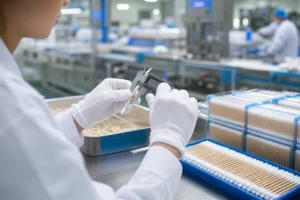
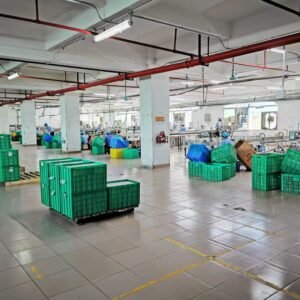
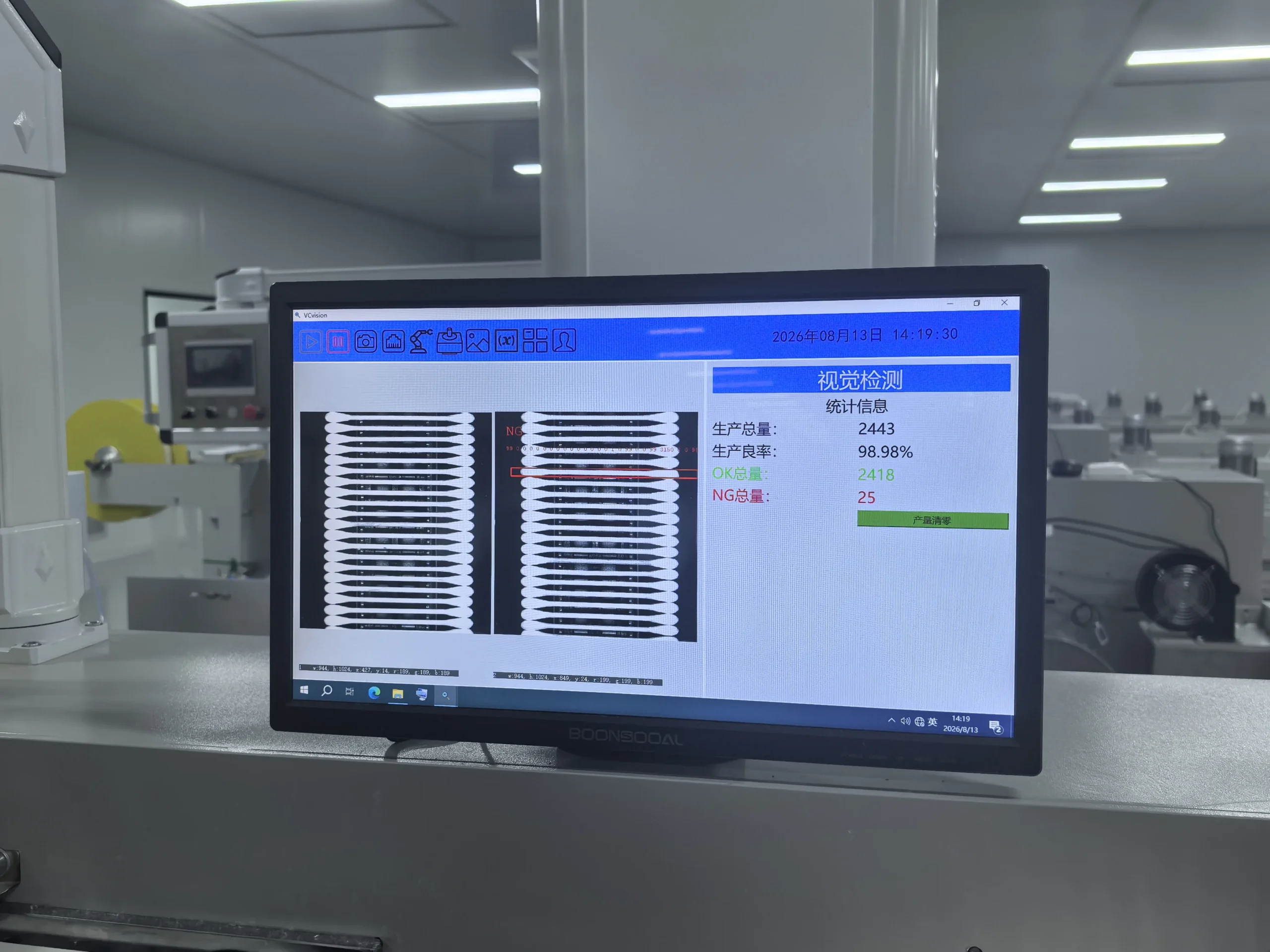
Second, production infrastructure. Evaluate the equipment and process controls at the facility that will make your order. SwabMasters’ new factory in Bazhou, Hebei uses automated production and bag-packing equipment with vision inspection, rejection and count compensation on applicable configurations. Its controlled clean environment, enclosed cotton-dust extraction and controlled adhesive preparation support consistent handling. Confirm output and availability for the specific SKU instead of relying on historical machine counts.
Third, the OEM/ODM ecosystem. Chinese manufacturers have decades of experience producing private label products for global brands. From custom stick materials (bamboo, paper, wood, plastic) to branded packaging design, the entire customization process is streamlined. Most factories can deliver finished samples within 7–10 days.
| Factor | China | India | Southeast Asia |
| Share of global production | 60–70% | 10–15% | 5–8% |
| Average FOB price (per 100-pack) | $0.08–$0.20 | $0.10–$0.25 | $0.12–$0.30 |
| Typical MOQ | 5,000–100,000 pcs | 50,000–200,000 pcs | 20,000–100,000 pcs |
| Sample lead time | 7–10 days | 14–21 days | 10–15 days |
| Customization flexibility | Very high | Medium | Medium |
| Certifications available | ISO, FDA, CE, GOTS | ISO, BIS | ISO, some FDA |
How Much Do Cotton Swabs from China Actually Cost?
This is the question every buyer asks first. And the honest answer is: it depends on five variables.
The FOB (Free on Board) price of cotton swabs from China varies dramatically based on the product type, stick material, tip configuration, packaging format, and order volume. Here’s a transparent breakdown based on real factory pricing as of May 2026.
FOB Price Ranges by Product Type
| Product Type | Stick Material | Tip Type | FOB Price (per piece) | FOB Price (per 100-pack) | Typical MOQ |
| Basic daily-use cotton buds | Plastic (PP) | Single-head, standard | $0.003–$0.005 | $0.08–$0.12 | 10,000 packs |
| Eco-friendly cotton buds | Paper | Single-head, standard | $0.006–$0.008 | $0.18-$0.20 | 10,000 packs |
| Bamboo cotton buds | Bamboo | Single-head, standard | $0.004–$0.006 | $0.1–$0.14 | 10,000 packs |
| Cosmetic/pointed tip swabs | Plastic or paper | Pointed + round | $0.005–$0.010 | $0.12–$0.25 | 10,000 packs |
| Medical-grade sterile swabs | Wood or plastic | Large oval tip | $0.02–$0.08 | N/A (individually packed) | 10,000 pcs |
| Industrial precision swabs | Plastic | Foam or microfiber | $0.03–$0.15 | N/A (individually packed) | 5,000 pcs |
| Iodine/antiseptic swabs | Plastic (sealed) | Pre-saturated | $0.04–$0.15 | N/A (individually packed) | 5,000 pcs |
The Five Factors That Determine Your Price
Factor 1: Stick material. Plastic sticks are cheapest ($0.001–$0.002 per stick). Paper sticks cost 20–40% more due to the materials and rolling and gluing process. Bamboo sticks carry around 5% premium over plastic but command higher retail prices in eco-conscious markets. Wooden sticks (birch) almost same as bamboo.
Factor 2: Cotton tip quality. Standard tips use recycled cotton fibers and cost less. Premium tips use 100% virgin cotton with higher density (measured in grams per tip). Medical-grade tips require purified absorbent cotton that meets pharmacopeia standards, adding $0.005–$0.02 per piece.
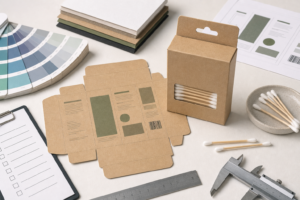
Factor 3: Packaging format. A simple poly bag with header card is the cheapest option ($0.01–$0.03 per pack). A printed cardboard box costs $0.03–$0.08. A round canister (like Q-tips brand) costs $0.05–$0.15. Eco-friendly kraft paper packaging falls in the $0.04–$0.10 range.
Factor 4: Order volume. This is where the biggest savings happen. A 10,000-pack order might cost $0.18 per 100-pack. Scale that to 100,000 packs, and the price drops to $0.10–$0.12. At 500,000+ packs, you’re looking at $0.08–$0.09.
Factor 5: Certifications and testing. If you need FDA registration, CE marking, ISO 13485 compliance, or third-party lab testing (SGS, Intertek), these add $2,000–$8,000 in one-time costs plus ongoing audit fees.
Pro Tip from SwabMasters: “Don’t chase the lowest price. We’ve seen buyers save $0.01 per piece on cotton tips, only to lose $50,000 when an entire container failed Amazon’s quality inspection. The $0.01 you save on cotton quality is the $0.01 that gets your listing suspended.” — Mike Zhang, Manufacturing Director
Understanding MOQ: Minimum Order Quantities Explained
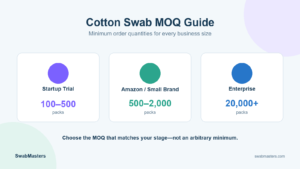
For detailed order-size recommendations by business stage, product type, customization level, and pricing tier, see our complete guide to understanding MOQ requirements.
MOQ (Minimum Order Quantity) is the smallest number of units a factory will produce in a single production run. For cotton swabs sourced from China, MOQs vary widely depending on the supplier type and product complexity.
Many first-time buyers are shocked by high MOQs. A large factory might quote 100,000 packs as their minimum. For a small Amazon seller or startup brand, that’s a $10,000–$20,000 commitment before you’ve sold a single unit.
Here’s how MOQs actually work in the cotton swab industry:
MOQ by Supplier Type
| Supplier Type | Typical MOQ | Price Level | Best For |
| Large factory (own brand) | 50,000–200,000 packs | Lowest | Established brands, large distributors |
| Mid-size OEM factory | 10,000–50,000 packs | Low–Medium | Growing brands, regional distributors |
| Flexible OEM factory (e.g., SwabMasters) | 5,000–20,000 packs | Medium | Amazon sellers, startups, small importers |
| Trading company | 1,000–5,000 packs | Highest (20–40% markup) | Micro-orders, market testing |
How to Negotiate Lower MOQs
The key to negotiating a lower MOQ is understanding the factory’s cost structure. Every production run requires machine setup time (typically 2–4 hours), material changeover, and quality calibration. The factory needs enough volume to cover these fixed costs.
Strategy 1: Accept a slightly higher unit price. Most factories will lower their MOQ if you agree to pay 10–15% more per unit. This is often the best deal for first-time buyers — you reduce your risk while the factory covers their setup costs.
Strategy 2: Use the factory’s existing molds and packaging. Custom packaging requires new printing plates ($200–$500 each). If you use the factory’s standard packaging with just a sticker label, the MOQ drops significantly because there’s no setup cost.
Strategy 3: Combine products in one order. If you’re sourcing both cotton swabs and cotton pads, combining them into a single order gives the factory more total revenue, making them more willing to lower the MOQ on individual items.
Strategy 4: Start with a trial order, then commit to a forecast. Tell the factory: “I want to start with 5,000 packs as a trial. If quality meets our standards, we’ll order 50,000 packs within 6 months.” This gives the factory confidence in future volume.
At SwabMasters, MOQ is confirmed against the selected product, packaging and production plan. Separate the number of individual swabs from the number of retail packs when comparing quotations. Request an order-specific quote.
Step-by-Step: How to Source Cotton Swabs from China
Sourcing cotton swabs from China follows a predictable process. Here are the seven steps that successful importers follow, based on our experience working with buyers in over 50 countries.
Step 1: Define Your Product Specifications
Before contacting any supplier, document exactly what you need. This saves weeks of back-and-forth. Your specification sheet should include the stick material and length, tip shape and cotton weight, quantity per pack, packaging type and dimensions, any required certifications, and your target retail price point.
Step 2: Find and Vet Potential Suppliers
There are four main channels for finding cotton swab suppliers in China:
Alibaba and Made-in-China are the most common starting points. Look for “Gold Suppliers” with trade assurance and at least 5 years of verified operation. However, be aware that many listings are from trading companies, not actual factories.
Canton Fair and trade shows let you meet manufacturers face-to-face and inspect samples on the spot. The Canton Fair (held in Guangzhou every April and October) has a dedicated section for hygiene and personal care products.
Google search for terms like “cotton swab manufacturer China” or “cotton bud factory OEM.” Manufacturers with their own websites (rather than just Alibaba stores) tend to be more established and professional.
Industry referrals from logistics companies, quality inspection firms, or other non-competing importers are often the most reliable source.
Step 3: Request Samples and Compare
Request samples from at least 3–5 suppliers. A professional manufacturer will send samples within 7–10 days, often for free (you pay shipping). When evaluating samples, check the cotton tip firmness (squeeze test — the tip should not detach easily), stick straightness and strength (bend test), packaging seal integrity, and overall finish quality.
Step 4: Negotiate Pricing and Terms
Once you’ve narrowed down to 2–3 suppliers, negotiate the FOB price, payment terms (typically 30% deposit + 70% before shipment or against B/L COPY for new buyers), production lead time (usually 30–35 days after deposit), and sample approval process.
Step 5: Arrange Quality Inspection
Agree the product specification, approved sample, defect classes, inspection unit and acceptance plan before placing the order. Decide which first-off, in-process and pre-shipment checks are needed, and confirm independent inspection access where required.
At the Bazhou factory, vision inspection and rejection address defined visible features, while count compensation supports the specified pack quantity on the applicable line. Ask how the configuration is checked for your product and how abnormal results are handled. Mechanical retention, material verification and any laboratory requirements remain separate checks.
Use our quality inspection guide to define the inspection scope with your quality team.
Step 6: Handle Shipping and Customs
Cotton swabs are classified under HS Code 5601.21 (articles of cotton wadding) . The US import duty rate is 4.7% ad valorem . For EU imports, the duty rate varies by country but typically ranges from 3–5%.
| Shipping Method | Cost Estimate | Transit Time | Best For |
| Sea freight (FCL, 40ft container) | $3,500–$6,000 | 15–35 days | Large orders (50,000+ packs) |
| Sea freight (LCL) | $50–$80 per CBM | 20–40 days | Medium orders (10,000–50,000 packs) |
| Air freight | $4–$8 per kg | 3–7 days | Urgent or small orders |
| Express (DHL/FedEx) | $6–$10 per kg | 3–5 days | Samples or micro-orders |
A standard 40-foot container can hold approximately 25,000–35,000 packs of 100-count cotton swabs, depending on packaging dimensions.
Step 7: Build a Long-Term Supplier Relationship
The most successful importers treat their Chinese supplier as a partner, not just a vendor. Share your sales data and forecasts so the factory can plan production. Visit the factory at least once a year if possible. Provide clear, timely feedback on quality issues. Pay on time — this is the single most effective way to get priority treatment during peak season.
Quality Control: The Make-or-Break Factor
Quality should be agreed in measurable terms before quoting and verified during production and before release. A camera on a line is useful evidence of a control method, but its presence alone does not prove that every product requirement is checked.
The 6-Point Quality Checklist for Cotton Swabs
- Tip retention: agree force, duration, fixture and acceptance limits for the product.
- Shaft performance: define dimensions, straightness and the applicable strength test for the material.
- Cotton specification: approve composition, weight, profile and appearance against a controlled sample.
- Production environment: review material handling, adhesive preparation and cotton-dust extraction; obtain any product-specific test evidence separately.
- Packing controls: verify how rejection, count compensation and finished-pack checks work for your format.
- Release records: agree sampling, defect disposition, batch identification and the documents needed before shipment.
FDA, CE & Regulatory Compliance for Cotton Swab Imports
Define the intended use, claims and destination before deciding which product requirements and documentation apply. Consumer cotton buds and products intended for medical use must not be treated as interchangeable categories. Have the importer and qualified compliance adviser verify the current requirements for the exact product.
For SwabMasters’ new Hebei facility, certification and buyer-audit work must be assessed against current, facility-specific evidence. Do not rely on a previous factory’s documents. Check the legal entity, factory address, covered activity, product scope and validity, and distinguish an audit-preparation program from a completed certification.
Automation and a controlled clean workshop do not by themselves establish sterile-product capability, regulatory approval or unrestricted import eligibility. Confirm required testing, registration, labeling and release documentation before an order is accepted.
How to Spot a Trading Company vs. a Real Factory
Ask which legal entity sells the goods, which facility makes them, and who controls quality and shipment release. An office address or a broad product catalog alone cannot tell you whether a business manufactures your SKU. A manufacturer can have a separate sales office; a trading company may also provide useful sourcing services.
A Practical Factory-Review Checklist
- Confirm the production address and the relationship between the factory and contracting entity.
- Ask for a live walkthrough of material handling, forming and the actual packing configuration.
- Discuss the defined visible-defect checks and observe how rejection works.
- Review how count compensation and finished-pack checks protect the ordered pack quantity.
- Compare an approved sample and specification with the product being run.
- Discuss in-process records, lot identification, corrective actions and inspection access.
- Check current certificates and reports for the facility and scope that matter to your order.
SwabMasters’ production site is in Bazhou, Hebei. The Dongguan office supports sales and buyer liaison in South China. Request a Hebei factory review when you need to assess production; arrange a Dongguan meeting for commercial discussions. Confirm the visit scope and available records in advance.
Send your SKU and factory-review requirements to plan the next step.
Frequently Asked Questions About Sourcing Cotton Swabs from China
What is the minimum order quantity?
Confirm product MOQ, printed-packaging MOQ and the quoted unit separately. Quantity depends on material, tip design, packaging and the production plan; request an order-specific quotation.
How long does production and shipping take?
Ask for a schedule covering sample approval, material and packaging availability, production, inspection and transport. Confirm dates against current factory loading and the shipping route.
Do I need FDA approval or other documentation?
Requirements depend on the intended use, product claims and market. Have your importer and compliance adviser verify the exact classification and documentation before ordering.
What is the HS code and duty?
Have a customs broker classify the finished product and confirm current duties for its origin and destination. Material, treatment and intended use can affect classification.
Can I get private-label packaging?
Discuss the artwork, bag or box format, pack count and materials with SwabMasters. Confirm packaging compatibility, sample timing and MOQ for the selected configuration.
How can I verify the production site?
Request a facility walkthrough and order-specific process evidence. For SwabMasters, distinguish the Bazhou, Hebei production facility from the Dongguan sales office.
Which certifications should I request?
Start with your buyer and market requirements, then verify current documents for the legal entity, factory address, scope and validity. Certification preparation is not a completed certification.
How are defective goods handled?
Agree defect definitions, inspection, acceptance, complaint evidence and remedies in the order terms. Confirm the disposition and any reinspection before shipment; do not rely on an assumed blanket refund policy.
Ready to Source Cotton Swabs from China?
For a comparable quotation, send SwabMasters your current sample or drawing, shaft material, cotton specification, pack format, order quantity and acceptance requirements. Our Bazhou factory’s automated production and in-line controls can then be evaluated against the needs of your retail or private-label program.
Request a specification review and quote · Explore the factory.
References
[1] Where Are Cotton Swabs Manufactured? A Global Overview — SwabMasters
[2] Cotton and Products Annual — USDA Foreign Agricultural Service, April 2026
[3] HS Code for Cotton Swab — Deepbeez, May 2026
[4] Classification of Medical Use Cotton Tip Applicators — U.S. Customs and Border Protection
[5] Import Alert 79-01: Detention of Topical Bandages, Dressings, Gauzes and Cotton Pads — FDA
[6] Cotton Swabs — FDA Establishment Registration & Device Listing