
Last updated: — Production and inspection sections updated for the Bazhou, Hebei factory.
The journey from cotton to a finished retail pack depends on more than the softness of the tip. Cotton preparation, shaft selection, adhesive application, forming, inspection and packing all affect the result. For a buyer, the useful question is how these stages are controlled for the product being ordered.
This guide follows the material-to-pack journey and explains how SwabMasters’ new factory in Bazhou, Hebei uses automated production and in-line controls. The Dongguan office supports sales and buyer communication; factory assessments should be arranged for the Hebei production site.

Why Cotton Swab Quality Can Vary
Variation can begin with cotton sliver, shafts or adhesive and continue through machine setup, handling and packing. A visibly attractive sample is not enough to control a repeat order. Record the cotton weight and profile, shaft dimensions, retention requirements and packaging details in an approved specification.
Whether a component is prepared internally or sourced from a supplier, it needs defined requirements and verification. Ownership of every upstream operation is not a substitute for an effective material and process-control plan.
Step 1: Cotton Sourcing and Material Qualification
Start with cotton composition, processing history, absorbency, cleanliness and the weight needed for the intended tip. Ask for the relevant material evidence and agree any testing requirements. Appearance alone cannot prove fiber composition, low lint or suitability for a particular application.
The shaft and adhesive must be reviewed at the same time. A paper shaft, bamboo shaft, wooden shaft and plastic shaft have different surface and mechanical characteristics. Keep the selected material and supplier specification consistent with the sample used for approval.
- Define material identification and the documents required on receipt.
- Approve the cotton profile and shaft dimensions for the SKU.
- Agree how material changes will be reviewed before production.
- Specify any additional testing required for the intended use.
Step 2: Cotton Sliver Preparation and Feeding
Cotton sliver is the continuous fiber feed used to form the tip. Its consistency matters because uneven feed can affect tip weight and shape. Preparation commonly involves opening, cleaning, carding and forming the fibers into a suitable feed, but the exact preparation route should be verified for the material being purchased.
For a factory review, establish which preparation operations take place on site and which materials arrive ready for use. Ask how feed characteristics are checked, how materials are identified and how an unsuitable batch is handled. Do not assume an unverified sliver weight range or in-house process applies to every order at a new facility.
Qualification must cover the final combination of cotton, shaft and adhesive. A feed setting that works for one tip geometry may need a different setup for another. Confirm changes with samples and measurements rather than treating all materials and tip forms as interchangeable.
Step 3: Automated Forming and Controlled Production
At SwabMasters’ Bazhou factory, automated production and bag-packing equipment reduce repetitive manual handling on suitable configurations. Operators remain responsible for setup, material replenishment, monitoring, maintenance and responding to abnormal results. Product dimensions and packaging compatibility determine the appropriate configuration.
Adhesive and Cotton-Dust Controls
Controlled adhesive preparation reduces unnecessary exposure during mixing and delivery. Enclosed extraction is installed at cotton-dust-generating points, within a controlled clean production environment. These measures support handling and process control; they do not establish product sterility or eliminate the need for finished-product checks.
Vision Inspection, Rejection and Count Compensation
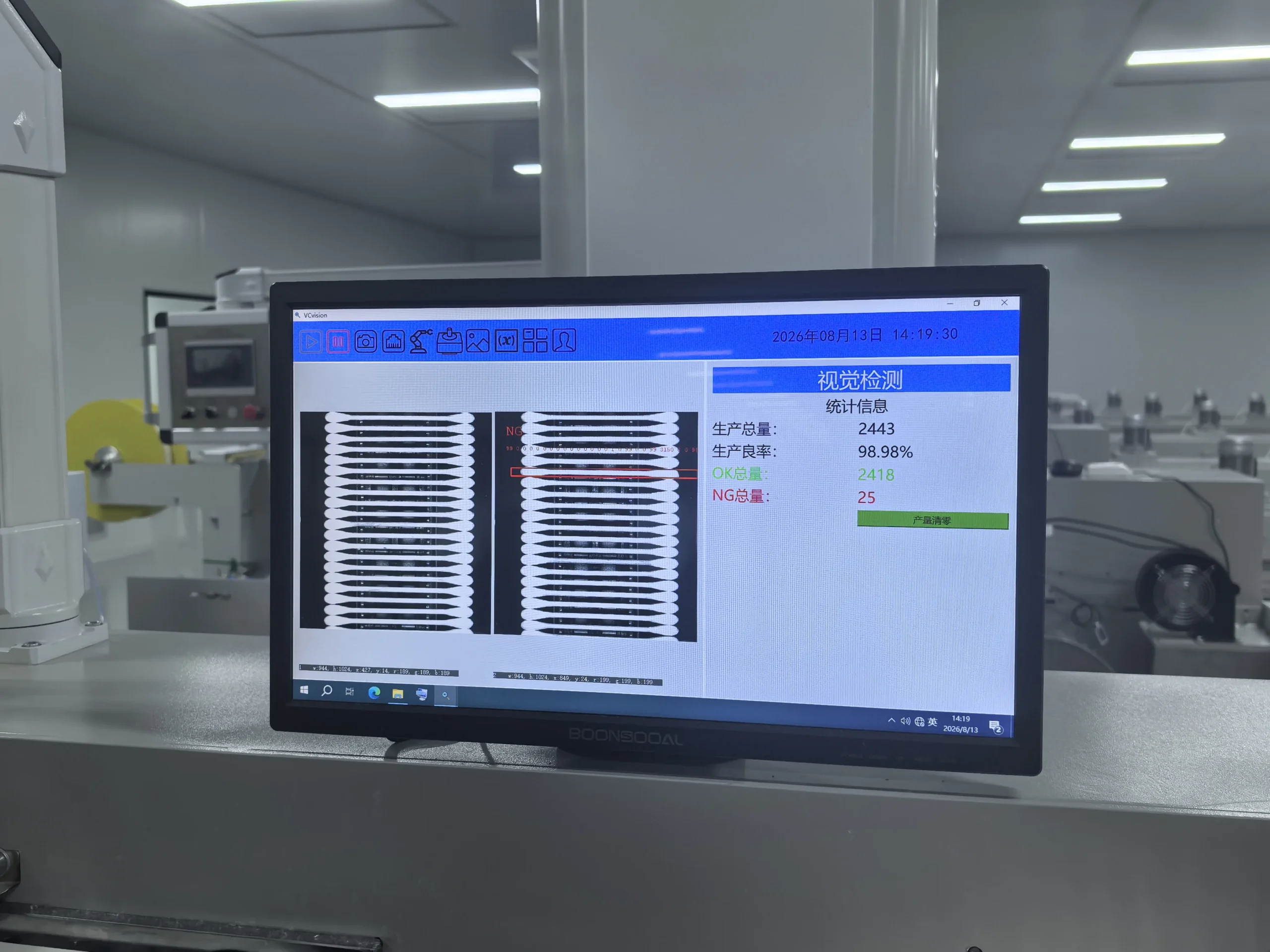
In-line vision inspection checks the defined visible features for the configured product. Pieces judged nonconforming are removed by the rejection mechanism. Count compensation then replaces rejected pieces to help maintain the specified quantity before bag packing on the applicable configuration.
During a review, ask which features the system actually checks, how the settings relate to approved defect examples, and how rejection and count compensation are verified. Do not infer retention strength, composition or microbiological status from a camera image.
Step 4: Product Checks, Packing and Release
A complete quality plan combines material checks, first-off approval, in-process monitoring and final inspection. Define shaft performance, cotton-to-shaft retention, dimensions and appearance with repeatable methods and agreed limits. Use the approved sample alongside the written specification.
For packing, check the selected pack count, seal, printed information, barcode and batch identification. Automatic counting and compensation support the packing operation, but finished packs still need checks under the agreed acceptance plan. A different bag film, pack size or carton arrangement may require new setup and verification.
Agree lot sampling and defect disposition before production. Where independent inspection or laboratory testing is required, confirm the scope, access and timing separately. Keep records of findings, corrective actions and any reinspection needed before release.
Read the quality inspection guide and the production process guide for the checks to discuss.
What These Controls Mean for Buyers
- More comparable samples and orders: the same specification guides material selection, forming and acceptance.
- Less repetitive handling: an appropriate automated configuration reduces manual transfers and packing tasks.
- Clearer defect control: buyers can review the actual visual checks, rejection process and additional tests.
- Better-defined pack requirements: counting, compensation and final checks can be evaluated together.
- A clearer qualification path: discuss samples, factory review and records before committing to a supply program.
These are process advantages, not a guarantee of zero defects, uninterrupted supply or a fixed cost saving. Evaluate their effect against the SKU, order size and evidence available for the production run.
Factory Documents and Audit Preparation
For the new Hebei factory, verify certificates and audit reports against the current legal entity, address, activity, scope and validity. Certification and buyer-audit programs in preparation should be described as preparation, not completed certification. Documents from a previous facility cannot establish the new site’s status.
Plan Your Product Review
Send SwabMasters a current sample or drawing, shaft material, cotton specification, pack format, expected volume and quality requirements. We can discuss the fit with the factory’s production and inspection configuration, the samples needed and the scope of a factory review.
Request a sample and specification review · Learn about the SwabMasters factory.